
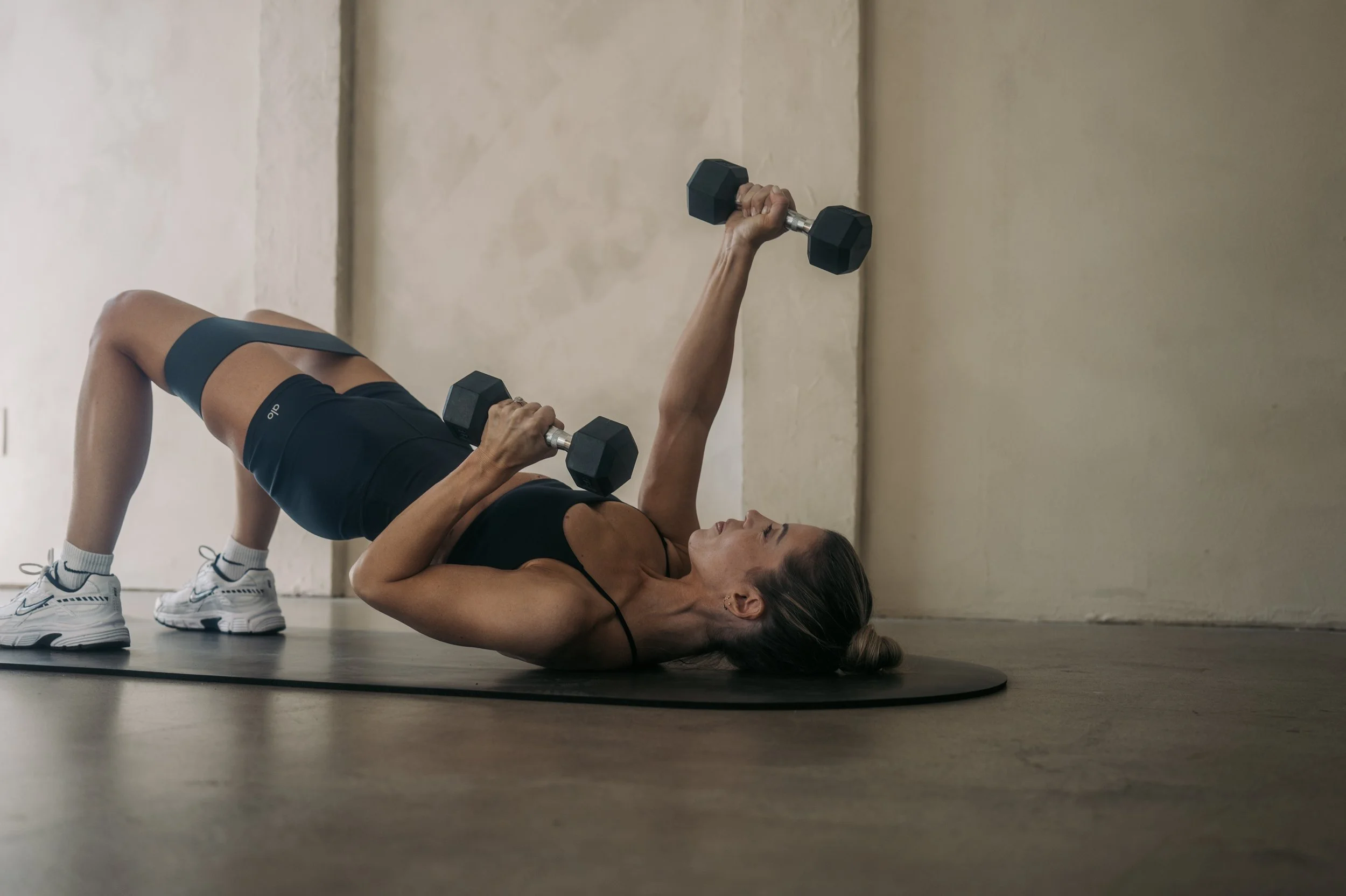
Strength training is one of the most effective ways to protect bone density after 40. As estrogen declines through perimenopause and menopause, the body's bone remodeling process shifts toward more bone being broken down than rebuilt. Resistance training places real mechanical load on your muscles and skeleton, which signals your body to maintain bone, and in some cases rebuild it, especially in the hips and spine.
I want to talk about this one plainly. The fitness industry tends to either oversell this topic with dramatic promises or undersell it as a niche concern for "older women." It's neither. If you're over 40, this is simply useful information about your own body.
Why does bone density drop after 40?
Bone is living tissue. It's constantly being broken down and rebuilt in a process that, for most of your life, stays roughly balanced. Estrogen plays a real role in keeping that balance steady. As estrogen drops through perimenopause, the balance tips, and bone loss can start to outpace rebuilding. It happens quietly. Most women don't feel it, which is exactly why the exercise choices you make in this window matter more than they seem to in the moment.
What is the best exercise for bone density?
Bone responds to mechanical stress. It needs to bear real load to get the signal to stay strong. Walking helps. Swimming and cycling are wonderful for your heart and joints but don't give bone much of that direct loading signal. Resistance training, using your body weight, dumbbells, or resistance bands, and making it progressively harder over time, provides it most directly.
I see this play out with clients all the time. Women who start with Pilates to build form and confidence, then add weights and steadily increase them, are the ones who tell me they feel stronger, more capable, and more like themselves than they have in years. (Here's how Pilates and strength work together.)
Is it too late to build bone density after 40 or 50?
No. Your bones don't stop responding to this signal just because you've crossed 40. Research consistently shows meaningful benefit from strength training started later in life, not just for people who've lifted their whole lives. It is genuinely not too late to start.
How Merus trains for bone health
This is a big part of why the perimenopause programming inside Merus Mat isn't a soft, low-load add on. It includes real strength work, progressively built, with days dedicated to full body strength, bone density, and posterior chain and balance. Dumbbells get heavier through each week, because that's what your bones and muscles need at this stage, not a gentler version of what you did at 25.
This topic matters to me because I'm living it. I want to be the woman who is still strong, still moving, and still keeping up with her kids (and someday her grandkids) decades from now. That starts with what we do now.
Start building: Try Merus free and begin the 28-day perimenopause plan.
Bone Density and Strength Training: FAQ
How much weight should I lift for bone density?
Choose a weight that feels challenging by the last few reps while your form stays clean, and increase it gradually over time. Progression is what keeps the signal strong.
Can resistance bands build bone density?
Bands add load and are a great tool, especially combined with dumbbells. Heavier, progressive load generally gives bone the strongest signal.
How many days a week should I strength train for bone health?
Two to three days a week of strength training is a common recommendation for adults.
Does Pilates help bone density?
Pilates with added resistance can help, and it builds the balance and posture that reduce fall risk. Pair it with progressive strength training for the most benefit. Talk with your doctor about your own bone health.